



A: For goods with sharp edges and corners, we recommend a hand stretch film with an improved tear-resistant formulation. Its enhanced tear resistance reduces the risk of puncture during wrapping and minimizes rework and rewrapping. If there are many sharp points and the load is heavy, you can also trial a metallocene-modified machine stretch film used together with edge protectors. We suggest requesting samples and running an actual wrapping test on site.
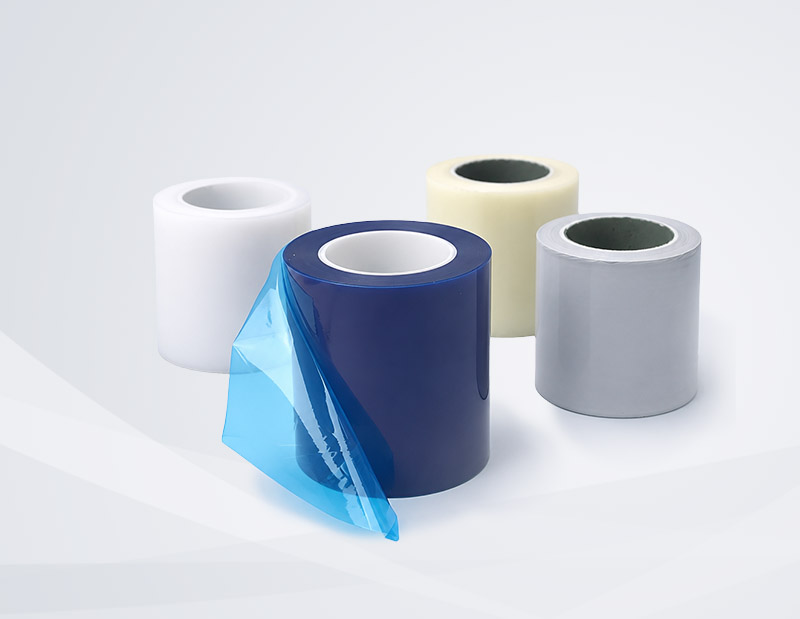
PE protective film
Substrate: LLDPE (Linear Low Density Polyethylene)
Adhesive: Water-based Acrylic Pressure-Sensitive Adhesive (mainstream type)
Standard Thickness: 30μm, 40μm, 50μm, 60μm, 80μm, 100μm, 120μm
Thickness Tolerance: ±5%–8%
Standard Width: 10–1500 mm
Width Tolerance: ±2–5 mm
Product Series:Products
Release Date:2026-08-27
Inquiry nowStandardized Technical Parameters
| Test Item | Unit | General Specifications |
| Tensile Strength (MD) | MPa | ≥15 |
| Tensile Strength (TD) | MPa | ≥15 |
| Elongation at Break (MD) | % | ≥200 |
| Elongation at Break (TD) | % | ≥200 |
| Applicable Temperature Range | ℃ | -20 ~ +60 |
| Adhesion Shelf Life | months | 6–10 |
| Adhesive Residue Requirement | — | No adhesive residue after removal |
| Light Transmittance (Clear Type) | % | ≥85 |
| Haze | % | ≤5 |
Core Product Advantages
Industries, Applications & Equipment We Serve
Product: PE Protective Film
Application Industry: Metal Processing (Aluminum Profiles, Aluminum Sheets & Stainless Steel Coils)
Description: The largest application scenario. Applied off-line to anodized or powder-coated aluminum profiles, stainless steel and color-coated steel coils to prevent scratches during processing, handling, storage and transport. Adhesion level and peel force must match the surface finish.
Application Industry: Glass Manufacturing & Deep Processing
Description: Applied off-line to architectural glass, appliance glass, mirrors and curtain wall glass for scratch and contamination protection. Requires bubble-free lamination, easy removal, weather resistance, and fast slitting to size.
Application Industry: Building Materials (System Windows & Doors / Panel Furniture)
Description: Applied during processing and installation of system windows and doors, fire-resistant panels, decorative panels and panel furniture to prevent scratches and contamination. Leaves no adhesive residue upon removal, and is typically purchased together with finished-product protection.
Application Industry: Plastic Sheets / Electronic Displays (Acrylic, PC, Panels)
Description: Applied to acrylic sheets, PC/PET sheets, and electronic product panels and screens for protection during turnover. Requires low gel count and high cleanliness with optical clarity, protecting against scratches while allowing easy downstream processing.
Customization Service & After-Sales Terms
Customization OEM & ODM Service
1. Size & Dimension
- Adjustable width and thickness to fit different products, pallets and wrapping equipment
- Custom length and roll weight; jumbo (master) rolls and finished slit rolls available, also supplied as bags or sheets
- Paper core with optional inner diameter (e.g. 3" / 76 mm); LOGO printing on the core supported
- Available for hand use and machine use, compatible with manual, semi-automatic and fully automatic machines
2. Performance & Formula
- Cling level, tensile strength and stretch rate tailored to your load — from light-duty to heavy-duty pallet wrapping
- Special functions: anti-UV, low-temperature resistant, heat resistant, anti-static, anti-fog, anti-rust (VCI), flame retardant, removable adhesive with no residue
- Virgin material or GRS-certified recycled material, meeting European environmental requirements
3. Color · Printing · Private Label
- Clear (transparent) as standard; milky white, black, blue, red, yellow and other colors available, matched to Pantone codes
- Flexographic printing in 1–6 colors: LOGO, company details, English warning text, shipping marks, batch number, barcode
- OEM private label: neutral unprinted rolls, with customer brand printed on cores and cartons
4. Certification & Compliance
- ISO9001, RoHS, REACH, SGS and GRS documents available; FDA certificate available for food-grade applications
- Supporting documents for EU EPR, PPWR and other customs clearance or factory audit requirements
5. Packing & Delivery
- Individual roll protection, printed shipping marks on cartons, shipped on full pallets
- Low MOQ for regular stock items; printed, colored and special-function versions are subject to a minimum order quantity
After-sales Service Quality Commitment
1. Quality Guarantee
- Mass production strictly follows the approved sample: size, physical properties and printing effect are consistent with the sample. If specifications are not met, replacement, discount or re-production can be negotiated
- For inherent quality defects (pinholes, uneven thickness, roll breakage, deformed rolls, missing or wrong printing), the customer provides photo and video evidence and the case is handled according to the defect ratio
- Special customized grades such as anti-UV, anti-static and GRS are delivered according to the technical indicators agreed in the contract
2. Inspection & Evidence
- Pre-production samples and bulk samples can be confirmed; factory inspection or third-party testing is supported
- Quality claim period: written feedback within 7–15 days after arrival at the destination port, with defect evidence provided; samples can be returned for re-checking if necessary
3. Logistics & Delivery
- Rolls are well protected before leaving the factory; if damage occurs during transit, we assist in filing a claim with the freight forwarder
- If delivery is delayed for reasons on our side, we communicate in advance and can arrange partial shipments or an adjusted delivery date
4. Documents & Technical Support
- Test reports and certificates are provided on request for audits and customs clearance
- Free technical support: product selection, machine adaptation and adjustment, application guidance for different conditions (sea freight / outdoor / cold storage), and troubleshooting
5. Exclusions (to be stated in the PI)
The following cases are not covered by after-sales service:
- Wrong specification selected by the customer (thickness / cling / tensile strength not matching the goods or the machine)
- Improper use: incorrect machine settings, unprotected sharp corners, over-long storage, or damage caused by high-temperature exposure
- Performance loss after delivery caused by cutting, soaking, prolonged sun exposure, etc.
- Slight color deviation or minor surface scratches within the range permitted by industry standards
6. Claim Options
Once the responsibility is confirmed to be on our side, the customer may choose: free replacement · discount on the current order · credit towards the next order
Frequently Asked Questions (FAQ)
-
My goods have sharp carton corners and metal edges. Hand stretch film keeps getting punctured during wrapping. What should I do?
-
How do I choose the right specification for hand stretch film? Is thicker always better?
A: Selection should not be based on thickness alone — it requires a combined assessment of load weight, whether there are sharp corners, and wrapping frequency. We offer hand stretch film in a range of low net-weight specifications. For companies with small-batch wrapping needs, choosing the right specification avoids overstocking and waste of large rolls. With the same raw material formulation, toughness and tear resistance affect actual wrapping protection more than thickness alone. You can request samples for a hands-on comparison test.
-
What is the net weight per roll of hand stretch film? Are weight and length accurate? Can you make smaller, lighter rolls?
A: Our hand stretch film is available in multiple roll weight grades, including low net-weight rolls suited to one-off replenishment and temporary wrapping needs. This reduces startup waste on small purchases and avoids long-term inventory buildup. All products are manufactured under fully digitalized quality control, with specifications produced according to order agreements. For specific roll weight and length figures, please consult our sales team.
-
When wrapping with hand stretch film, the layers don't stick together and the load loosens or slips after wrapping. Why?
A: Our hand stretch film uses a moderate-cling formulation. Under normal wrapping with proper tension, the layers bond tightly, reducing the risk of loads coming apart in transit. If layers fail to stick, common factors include: ① insufficient stretch, so the film does not make full contact; ② low ambient temperature, which slightly reduces cling; ③ dust or moisture on the cargo surface. We recommend keeping cargo surfaces dry and applying moderate stretch with overlapping wraps. In low-temperature winter warehouses, store the film at room temperature indoors before use.
-
Why does hand stretch film sometimes break suddenly during manual wrapping?
A: Our hand stretch film uses an improved formulation with good tear resistance and does not break easily under normal manual operation. Besides the film itself, breakage can also be caused by excessive stretching force, sharp edges cutting directly into the film, or low storage temperatures making the film brittle. If breakage occurs frequently on site, contact our sales team with your operating conditions and photos so we can help troubleshoot, or request samples for an on-site comparison test.
-
Within the same purchase batch, why do some rolls pull smoothly while others are hard to unwind?
A: We apply quality control across the entire process, keeping stretch force and cling as consistent as possible from roll to roll. This reduces variation in unwinding feel, keeps the wrapping experience stable for workers, lowers training costs, and delivers uniform packaging results. If you notice differences in feel upon receipt, first check storage conditions — large temperature swings, or rolls exposed to freezing or heat, will change the unwinding feel. If anything seems abnormal, contact your sales representative with details of the conditions.
-
Does hand stretch film leave adhesive residue on cargo surfaces?
A: Hand stretch film uses self-cling between layers, not adhesion to the cargo surface, so under normal use it leaves no residue on goods. However, prolonged storage in high temperatures or direct sunlight, or storage beyond the shelf life, may cause performance changes. We recommend storing in a cool, dark place and using unopened rolls within 12 months.
-
What is the minimum order for hand stretch film? Can I get samples to test? Do you support customization?
A: Samples of standard specifications are available on request — we recommend testing on site before placing a bulk order. Standard stock items have a corresponding minimum order quantity. For customized width, color or other parameters, a custom MOQ applies. Please consult our sales team to confirm minimum quantities and sampling lead time.
-
For long-term purchasing, will quality vary between old and new batches?
A: We work in close partnership with leading upstream raw material suppliers and source materials directly at the source. We operate our own testing laboratory and monitor thickness, stretch force and cling online on the production line. With a closed R&D-production-sales loop driving continuous process refinement, we keep batch-to-batch variation to a minimum, ensuring stable feel and wrapping performance over the long term and reducing inconsistency between old and new batches.